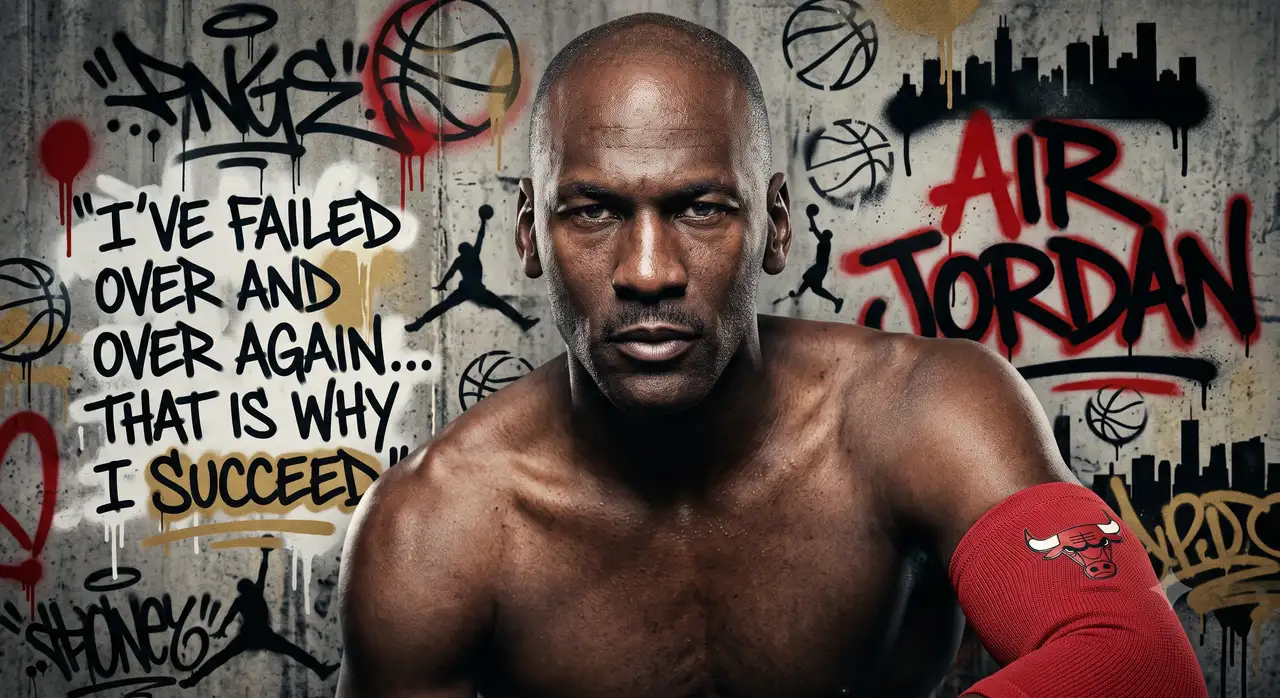
With 18.9 seconds left in Game 6 of the 1998 NBA Finals, the Chicago Bulls trailed the Utah Jazz by a point. Michael Jordan stripped the ball from Karl Malone near the top of the key, walked it up the floor, sized up Jazz defender Bryon Russell, and hit a crossover dribble that bought him half a step. He rose, held the follow-through, and watched the jumper drop for an 87-86 lead that held. It was his sixth championship, his sixth Finals MVP, and, as it turned out, his final shot in a Bulls uniform. Nearly three decades later, that image, the extended arm and the still body against a blurred Utah crowd, remains the single most reproduced photograph in basketball history. It is also a fair summary of why the debate over the greatest player the sport has produced still runs through Jordan first.
The résumé alone would make the case. Jordan won six NBA championships, in 1991, 1992, 1993, 1996, 1997, and 1998, and was named Finals MVP in every single one, a perfect record no other player has matched. He collected five regular-season MVP awards, ten scoring titles, and finished his career averaging 30.1 points per game, still the highest scoring average in NBA history more than twenty years after his final game. He was Defensive Player of the Year once and made the All-Defensive First Team nine times, a rare combination of offensive dominance and defensive commitment that separates him from most scorers of his caliber. Two three-peats, with a baseball detour in between, and zero losing seasons in the Finals. The numbers are not just good. They are structured in a way that leaves almost no argument for someone else having done more with less room for doubt.
What made Jordan's game different from the generation before him was the range of ways he could beat you. Earlier stars tended to have one dominant tool: a post game, a jump shot, elite athleticism. Jordan had a young man's explosiveness combined with an older craftsman's footwork, and as his athleticism declined in his thirties he simply built a new game around a fadeaway jumper that became nearly unblockable because of the years of practice behind the decision-making. Opposing coaches built entire defensive schemes, most famously the Detroit Pistons' "Jordan Rules," around trying to contain him, and even those schemes only slowed him for a few seasons before he adapted past them. That adaptability, the willingness to rebuild his game as his body changed, is part of what separates him from athletes who simply peaked and declined.
The 1997 Finals against those same Jazz produced the other image that defines him, the "Flu Game." Jordan was severely ill, reportedly from food poisoning, before Game 5 in Salt Lake City, visibly drained and barely able to stand during timeouts. He still played 44 minutes and scored 38 points, including a decisive three-pointer late in the fourth quarter, before teammate Scottie Pippen had to help him off the court, unable to stand under his own power. "Probably the most difficult thing I've ever done," Jordan said afterward. "I almost played myself into passing out just to win a basketball game." The Bulls won that game and closed out the series two nights later. The Flu Game has become basketball shorthand for competitive will, a single performance that gets cited whenever a player is described as refusing to be stopped by physical limits.
None of it happened without real failure first, and that failure is part of what makes the eventual dominance persuasive rather than inevitable. Jordan was famously cut from his varsity team as a high school sophomore in Wilmington, North Carolina, a story he returned to for motivation throughout his career. His Bulls lost repeatedly to the Pistons in the late 1980s before breaking through. His father, James Jordan, was murdered in 1993 during a robbery, a tragedy that came shortly before Jordan's abrupt first retirement and a year-and-a-half attempt at professional baseball, a detour that baffled much of the sports world at the time. When Jordan returned to basketball and the Bulls won the 1996 title, on Father's Day, he collapsed to the locker room floor in tears, clutching the game ball. "I know he's watching," Jordan said through tears. "To my wife, to my kids, to my brothers and sisters, this is for Daddy." It remains one of the rawest moments captured in American sports television, a global superstar reduced, for a few seconds, to a grieving son.
That combination of dominance and vulnerability is a large part of why Jordan's cultural footprint extends so far beyond basketball itself. The Air Jordan sneaker line, launched with Nike in 1984 against the wishes of the league office, which briefly fined him for wearing shoes that violated its uniform color rules, became a business empire that reshaped how athletes think about endorsement deals and personal brands. "Space Jam" made him a movie star. The 2020 documentary series "The Last Dance" introduced his career to a new generation and reignited debate about his methods, including the demanding, occasionally punishing standards he held teammates to, a leadership style that produced championships but also drew criticism as excessive by modern coaching norms. Both things can be true: Jordan's competitiveness pushed teammates to a level they might not have reached otherwise, and it also came at a cost to some of those relationships that the documentary made uncomfortably visible.
The GOAT conversation Jordan sits at the center of has only gotten more complicated as the league has changed. LeBron James has passed him in career scoring, playmaking numbers, and longevity, playing at an elite level into his forties in a way Jordan's generation rarely attempted. Kareem Abdul-Jabbar held the all-time scoring record for nearly forty years and won six championships of his own across two different decades and two franchises. Modern advocates for James point to statistical range, four championships with three different franchises, and a career built to withstand two decades of erosion that would have broken most athletes' bodies. The counterargument for Jordan rests less on total accumulation and more on peak efficiency and a perfect Finals record that no volume of longevity has replicated. It is a legitimate disagreement, not a settled one, and reasonable observers land on different sides depending on how much weight they give era, competition level, and longevity against pure dominance.
What is not seriously disputed is Jordan's influence on how basketball is played, marketed, and watched globally. The NBA's international expansion through the 1990s tracked closely with his rise to worldwide fame. An entire generation of players, from Kobe Bryant to a long list of shooting guards who copied his mechanics down to the tongue-out follow-through, built their games in direct imitation of his. Coaches still use "Jordan Rules" as shorthand for defensive strategy built around stopping one transcendent scorer. Even players who never saw him play live grew up watching highlight reels that shaped their sense of what basketball excellence looks like.
Jordan's career ended, competitively speaking, with that shot in Utah, the story arc closing on the image that best represents him: calm under maximum pressure, decisive when a season and a legacy hung on a single possession. Basketball has since produced players with bigger statistical footprints and longer careers. None have combined dominance, competitive theater, and cultural reach quite the way Jordan did across thirteen full seasons in Chicago. That combination, more than any single number, is why his name remains the standard against which every new great is measured, even by the players trying to surpass him.
Does a perfect 6-0 record in the Finals outweigh the larger statistical and longevity case being built by the players who came after him?