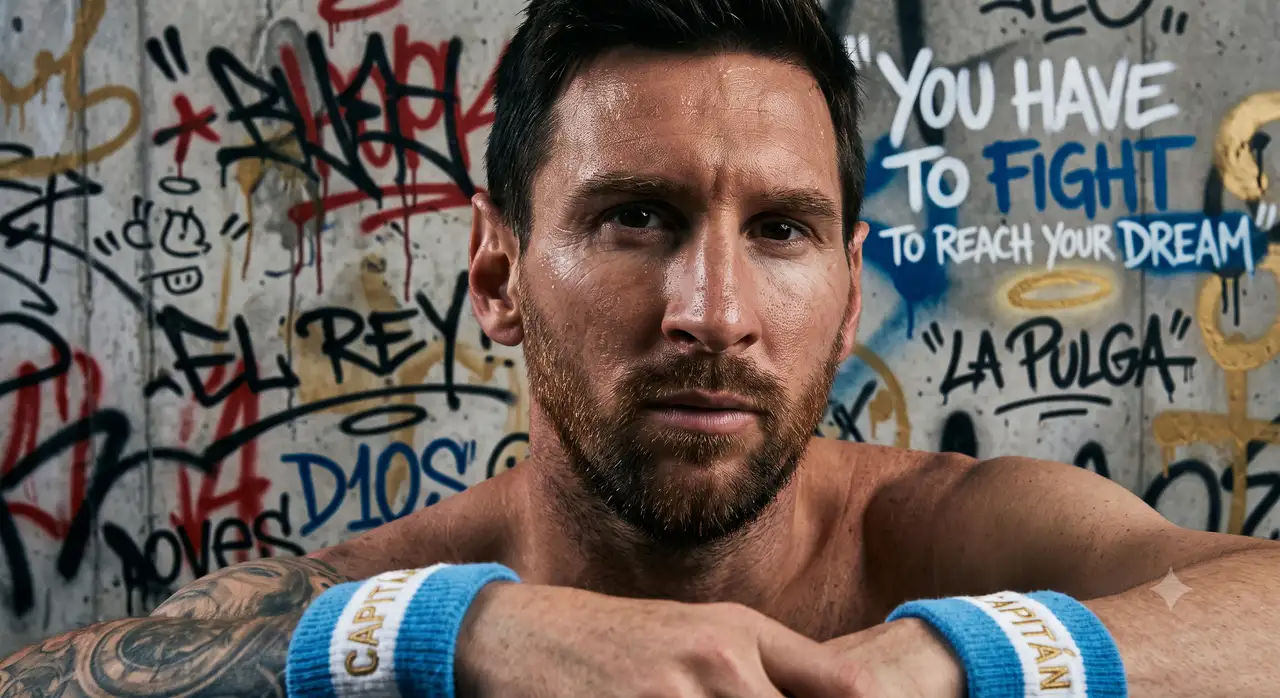
That argument is not new, and it will not be settled by one article. But by 2026, with Messi having played his fifth World Cup at 39 years old and Argentina reaching the final again before losing to Spain, the body of evidence is as complete as it will ever be. The case for Messi as football's greatest player rests on more than trophies. It rests on the specific, repeatable things he did better than anyone who has ever played the sport, sustained over nearly two decades at the highest level.
Start with the raw numbers, because they are almost absurd. Messi surpassed 900 official career goals for club and country during the 2026 season, a tally built at a rate no other modern forward has matched, and he has more than 400 assists to go with them. He has won a record eight Ballon d'Or awards, more than double what most legendary players managed across entire careers, spread across three different decades of form: 2009 through 2012, 2015, 2019, 2021, and 2023. He won the World Cup Golden Ball as the tournament's best player twice, in 2014 and again in 2022, the only man to do so. Add ten La Liga titles and four Champions League trophies with Barcelona, an Olympic gold medal, a Copa América, and league titles in France and the United States, and the trophy count reaches into the high forties. Almost no position on that list is contested. What is contested is what it all means next to Pelé's three World Cups or Diego Maradona's singular 1986 tournament or Cristiano Ronaldo's five Champions Leagues and five Ballons d'Or of his own.
The Ronaldo comparison is the one that has shaped Messi's entire adult career, two players born five months apart who spent fifteen years pulling defenses apart in parallel, mostly without playing each other directly more than a handful of times a year. Ronaldo built himself into a physical marvel: aerial power, explosive pace, a shot that could be aimed like an arrow. Messi built almost the opposite game. He plays low to the ground, changes direction in a stride, and manipulates space with a first touch that consistently puts the ball exactly where his next move needs it to be. Where Ronaldo often looks like he is imposing his will on a match, Messi looks like he is solving it, reading gaps that aren't there yet and being in them before anyone else understands why. Both approaches produced historic numbers. The debate over which is more remarkable is really a debate over what greatness in football should look like, and it has no clean answer, which is part of why the rivalry consumed a generation of fans.
What separates Messi's case, for those who argue he sits alone at the top, is Barcelona's La Masia academy education and the way it shaped a footballing intelligence that never depended on physical peak. He arrived from Rosario, Argentina, at 13, small enough that his family needed the club to help fund growth hormone treatment just to keep him playing, and left as the most complete technical player the sport had produced. That technical foundation is why his best individual seasons, statistically, may have come well into his thirties rather than fading with age the way most forwards do. His 91-goal calendar year in 2012 remains a single-season record unlikely to be broken, but his production in his final Barcelona seasons and his form for Inter Miami and Argentina in his late thirties suggests a player whose game was never really about speed or leaping ability in the first place. He aged like a chess player, not like a sprinter.
Then there is the international question, which for decades was the one hole in the resume. Messi lost the 2014 World Cup final to Germany, lost the 2015 and 2016 Copa América finals on penalties, and faced genuine calls in Argentina to retire from the national team after that second loss. He came back. Argentina won the 2021 Copa América, their first major trophy in 28 years, with Messi visibly overcome with emotion on the field in Brazil, a moment many now point to as the true turning point. Eighteen months later came Qatar, five goals and three assists across the tournament, two goals in the final itself, and the World Cup that had defined the entire shape of the GOAT conversation around him. Nobody could credibly call the resume incomplete after that.
Even the most recent chapter adds to the case rather than undercutting it. At an age when most elite forwards have long since retired or become squad players, Messi started and inspired Argentina's run to the 2026 World Cup final, including an assist-laden comeback semifinal win over England in Atlanta. Argentina fell short in the final against Spain, and Messi was left in tears on the field afterward in what is widely presumed to be his last World Cup appearance. It was not a fairytale ending, but the fact he was still the player Argentina built its attack around, at 39, against the best teams left in the tournament, says something about longevity that no statistic fully captures.
None of this means the debate is closed, and honest analysis should say so plainly. Maradona's supporters point to 1986, when he all but won a World Cup by himself, dragging an ordinary Argentina side to the title with a run of individual moments no player has matched before or since, including the "Goal of the Century" and the "Hand of God" in the same match against England. Pelé's three World Cup winners' medals, across three different decades against a smaller, less globalized pool of competition, remain a mark of longevity and adaptability that predates modern sports science entirely. Ronaldo's backers note his five Champions League titles to Messi's four, his goal-scoring in three different leagues, and years in which he was arguably the better player. None of these arguments are frivolous. Football, unlike a stopwatch sport, resists a single objective measure of greatness, and every generation of fans tends to anchor its judgment to the players it watched grow up.
What makes Messi's case distinct is the combination rather than any single category. He has the individual numbers of a natural goal-scorer, the vision and passing range of a creator, the decorated club career of a dynasty player, and, since 2021, the international silverware that critics said he lacked. Few players in the sport's history check every one of those boxes at once, and the ones who came close, Maradona and Pelé especially, did it in eras without the schedule density, the tactical sophistication, or the physical demands of the modern game, which cuts both ways in any comparison across time.
There is also the matter of how he made people feel, which sits outside statistics but shouldn't be dismissed. Barcelona's Camp Nou used to go quiet in a particular way whenever Messi picked up the ball near the box, an anticipatory hush that experienced broadcasters could hear even through a television microphone. Defenders who built entire careers on containing dangerous forwards routinely described facing him as facing something closer to an unsolvable puzzle than an opponent. That reputation, earned match after match for the better part of two decades, is its own form of evidence, even if it can't be tabulated.
Messi's career will eventually be measured the way all great athletes' careers are, through the argument that outlives the man himself. What can be said with confidence now, with the 2026 World Cup behind him and the international phase of his story likely finished, is that he built the most complete résumé the sport has to offer: the individual honors, the trophies, the World Cup, and nearly two decades of a level of consistency that never had an obvious decline phase. Whether that is enough to call him football's greatest of all time depends on how a person weighs eras, competition, and moments against sustained brilliance. It does not depend on whether he did enough. He did.
The Debate: Does winning it all, spread across two decades, outweigh the single transcendent tournament that defined Maradona's legend?